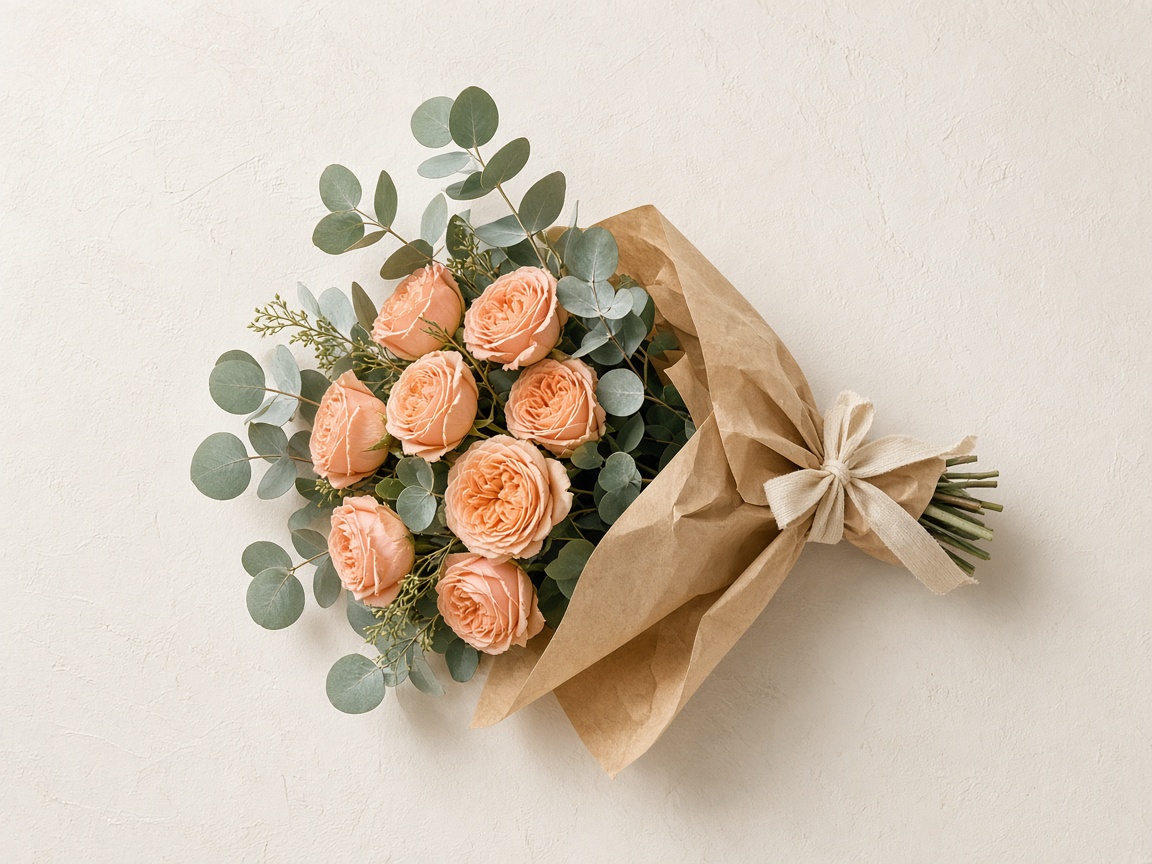
Hand-tied bunches travel.
A hand-tied bunch is spiraled so the stems make a handle and the heads make a dome. Cotton tape or twine holds it. You can carry it across town, and the recipient can cut the binding and drop it into a vase without rebuilding it.
Ask for this when the gift changes hands: a birthday at the office door, a host on the porch, a hospital desk. It looks finished before it ever sees a vessel. If the person has no vase, say so. A shop can wrap the ends in a water bulb, or you can bring a jar.
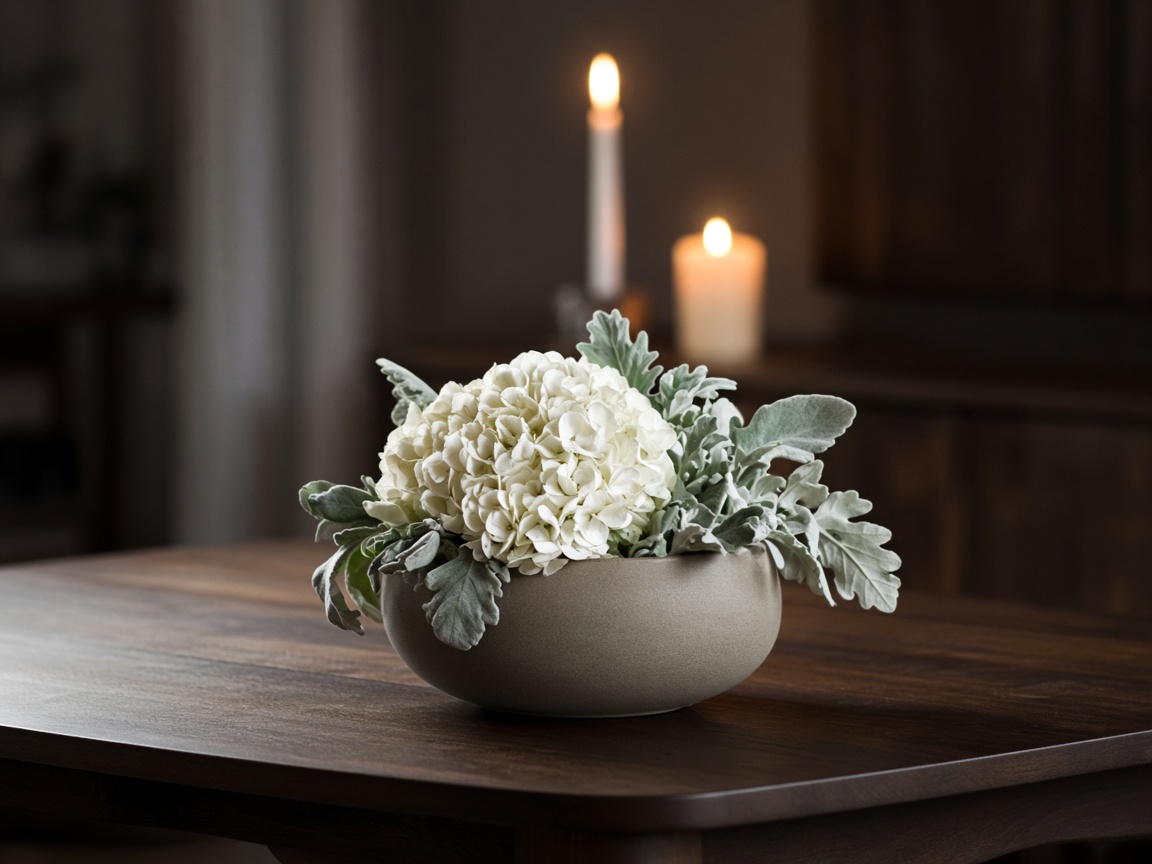
Low bowls keep the table social.
A centerpiece fails when people crane around it. Keep the flowers under eye level: a wide bowl, heads resting outward, nothing spiking up the middle. Hydrangea, garden rose, and carnation do this work because the blooms are round and sit down.
For a dinner, tell the florist the table length and that people will be seated opposite. “Low enough to talk over” is a complete instruction.
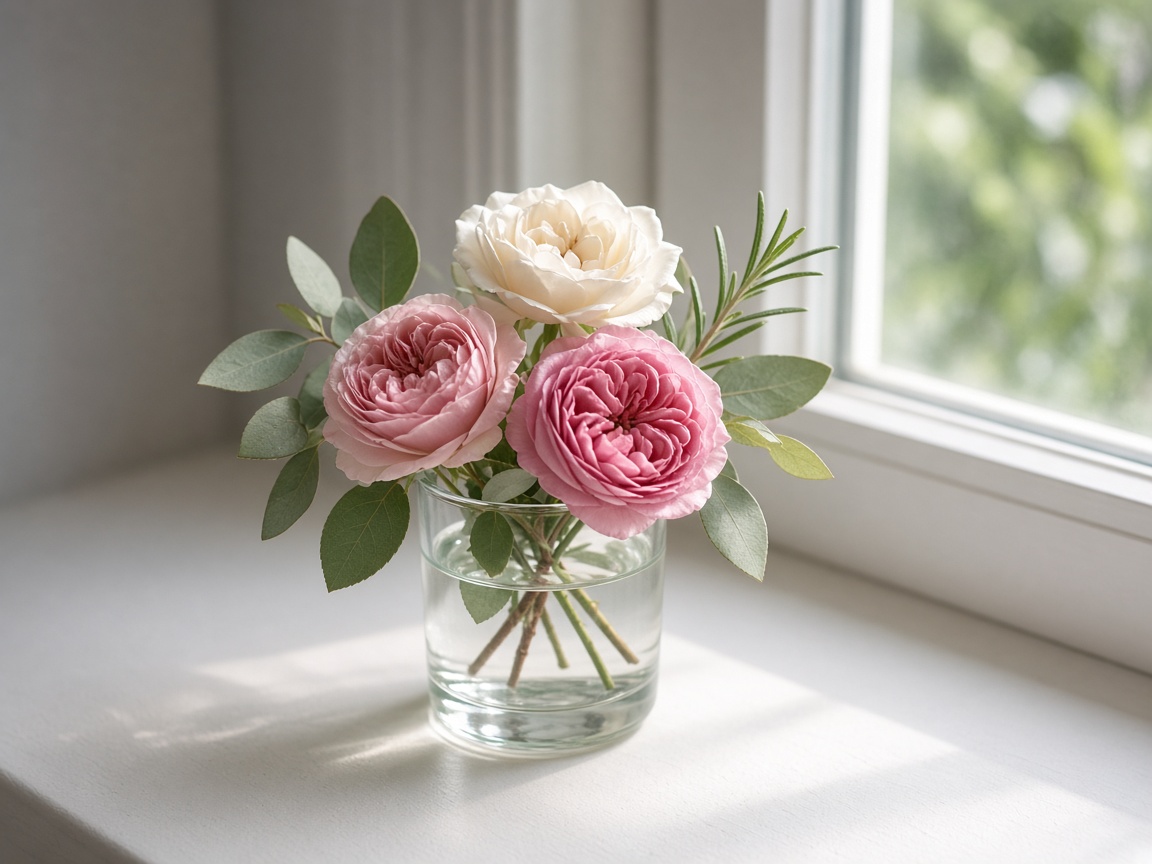
A posy is a decision, not a budget apology.
Three or five serious stems read as intent. A dozen small filler stems can read as panic. Peony, garden rose, ranunculus, and dahlia have enough face to stand nearly alone. Add one contrasting leaf or a sprig with smell, then stop.
Stem count is a weak number.
Five peonies can look fuller than fifteen spray roses. When a shop quotes a count, ask what the lead bloom is. If you want it to feel generous, talk about the width of the finished bunch — a forearm, a dinner plate, a pitcher — instead of a number that changes meaning every month.
One lead flower, one different shape, one leaf. That is the whole composition trick. Round plus round plus round looks flat. Round plus a spike plus something trailing looks arranged.